

IncidentResponse Services
Rapid response to IT incidents with 24/7 emergency support.
When an IT incident hits, your teams need action fast. MediSure delivers Incident Response Services that help contain impact, restore critical systems, and keep healthcare operations moving with clear steps and predictable communication.
Overview
Healthcare work doesn’t stop after business hours. MediSure provides 24/7 IT helpdesk services that support clinical and admin tools with clear ticket handling, steady updates, and a consistent process from intake to resolution.
Emergency Response Capabilities
When healthcare IT emergencies strike, our expert response team is ready to act immediately. We provide comprehensive incident management to protect your operations and patient data.
Rapid Response
Sub-15 minute response time for critical healthcare IT incidents with immediate escalation protocols.
Security Incidents
Comprehensive cybersecurity incident response including breach containment and forensic analysis.
System Recovery
Complete system restoration services with data integrity verification and business continuity planning.
Expert Team
Certified incident response specialists with healthcare IT expertise and regulatory compliance knowledge.
Common Incidents We Respond To
We respond quickly, then follow structured steps to stabilize systems and reduce repeat disruption.
Ransomware and malware containment
Phishing and account compromise
Server outages and critical system downtime
Network outages and site-to-site connectivity failures
EHR access interruptions and performance degradation
Backup failures and recovery support
Incident Response Workflow
We keep responses predictable so your team knows what happens next. Our workflow fits healthcare operations without unnecessary complexity.
Confirm
Validate the incident, scope, and affected systems.
Triage
Prioritize based on patient care impact and operational risk.
Contain
Isolate affected systems and reduce spread or downtime.
Restore
Recover services safely and bring critical systems back online.
Review
Document outcomes and reduce repeat incident triggers.
Severity Levels and Escalation
Not every issue is the same. Clear severity levels ensure urgent incidents are handled first, with predictable escalation and updates.
| Severity | Example incidents | First response target | Update rhythm |
|---|---|---|---|
| Critical | EHR down, ransomware spread, site-wide outage | Within minutes | Frequent updates until stable |
| High | Major system degraded, key workflow blocked | Fast priority response | Regular updates during remediation |
| Medium | Localized outage, non-critical service down | Scheduled response window | Updates at key milestones |
| Low | Minor issue, low impact | Best-effort within SLA | Updates on resolution |
Critical
Example: EHR down, ransomware spread, site-wide outage
Response: Within minutes
Updates: Frequent updates until stable
High
Example: Major system degraded, key workflow blocked
Response: Fast priority response
Updates: Regular updates during remediation
Medium
Example: Localized outage, non-critical service down
Response: Scheduled response window
Updates: Updates at key milestones
Low
Example: Minor issue, low impact
Response: Best-effort within SLA
Updates: Updates on resolution
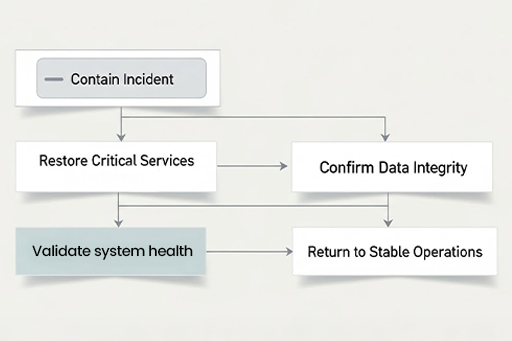
What Happens After We Contain the Incident
Containment is step one. Recovery is where stability returns. Our incident response services focus on restoring operations without rushing risky changes.
Recovery focus
Restore critical services in the right order
Validate system health and performance
Confirm data integrity after restoration
Reduce repeat downtime triggers
Communication and Reporting
During an incident, confusion makes everything worse. We keep communication clear so teams understand status, next actions, and expected timelines.
| What you get | Why it helps |
|---|---|
| Incident status updates | Keeps leadership and operations aligned |
| Action and resolution notes | Reduces repeated questions and delays |
| Root cause summary (when possible) | Helps prevent repeat failures |
| Next-step recommendations | Guides follow-up improvements |
Security and Supporting HIPAA Compliance
Incidents often touch systems that handle sensitive patient information. During response work, we keep actions controlled and documented so services can be restored without creating new risk.
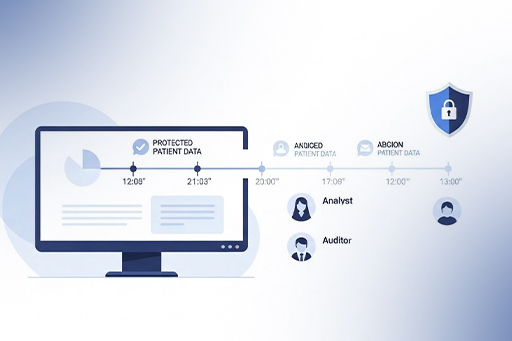
What you can expect
Access controls applied to limit who can view or change sensitive systems
Secure handling steps for credentials, logs, and incident artifacts
Audit-ready documentation of actions taken and key timestamps
Clear separation of roles so changes stay accountable
Validation steps after recovery to confirm systems are stable and secure
How Monitoring Improves Incident Response
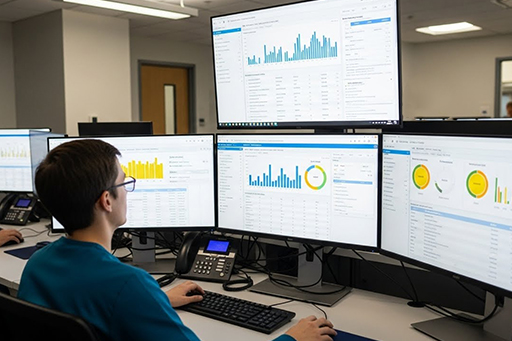
Incidents rarely start as everything being down. They begin as small warning signs like slow systems, unusual activity, or rising errors. Monitoring helps teams respond early before disruption spreads.
Why monitoring makes response faster
Earlier detection means faster triage and less downtime risk
Alerts route issues to the right team before impact grows
Correlated signals reduce guesswork during troubleshooting
Threshold tuning helps avoid alert fatigue while keeping critical alerts visible
Better visibility supports cleaner post-incident review and prevention planning
Why Choose MediSure’s Incident Response Services
You need more than “we’re available.” You need a response that feels controlled when everything else feels chaotic.
24/7 emergency response coverage
Structured triage and escalation workflows
Recovery support focused on stability
Documentation that supports audit readiness
Clear communication from start to resolution
Who We Support
MediSure Solution offers specialized healthcare IT services and support for a variety of industries, ensuring each sector’s unique needs are met with secure, efficient, and compliant technology. Here’s how we help:

Hospitals
Secure IT systems ensuring uptime, data safety, and smooth healthcare operations.

Medical Centers
Modernizing IT systems for flexibility and reliability in patient care.

Medical Laboratories
Faster, more reliable results with IT systems ensuring accuracy and compliance.

Pharmaceutical and Biotech Companies
Intelligent IT systems for secure data, compliance, and global collaboration.

Healthcare Product Companies
Enhancing security, improving workflows, and ensuring smooth operations.

Healthcare Startups
Empowering startups with secure, efficient IT infrastructure.

Pharmacy Chains & Specialty Pharmacies
Managing and securing critical IT systems for enhanced performance.

Orthopedic Centers
Optimizing IT systems to improve patient care and reliability.

Digital Health & Wearable-Tech Startups
Providing secure IT systems that drive innovation and support scalable growth.
Frequently Asked
Questions
Get answers to common questions about our 24/7 healthcare IT support services, staffing, processes, and service capabilities.
An incident is any event that disrupts clinical systems, access, security, or critical workflows. This includes outages, performance failures, or security threats.
Response speed depends on severity. Critical issues are prioritized immediately using defined escalation workflows to reduce impact on care delivery and operations.
We confirm the incident scope, triage impact, and begin containment steps to reduce spread and minimize downtime risk.
Yes. We at MediSure support containment, account protection steps, and recovery planning based on the incident impact and system scope.
We provide incident notes, key actions taken, and outcome summaries that support audit-ready documentation practices.
Yes. We align response and routing with defined escalation paths, and this can be connected to ticket escalation and SLA management workflows.
Ready to Get Started?
Contact our team to learn how our Incident Response Services can support your needs and improve your efficiency.
Call us now: +1 (951) 622-8126